
Corn rootworm (CRW) remains one of the most significant threats to yield and profitability across the Central Corn Belt. And like many challenges in farming, the key to managing it well comes down to one thing: understanding your risk.
The reality is rootworm pressure can vary widely from year to year and even field to field. Past pressure, crop rotation, and in-season conditions all play a role, but no single factor tells the whole story.
That’s why the most effective management strategies are built on real, field-level data.
Two Ways to Monitor Rootworm Pressure
1. Digging Roots
Root digs help you understand what has already happened. By evaluating root feeding and injury, you can determine how well your current management program is performing.
Learn more here
2. Monitoring Adult Beetles
Monitoring adult beetles gives you a look ahead. Adult populations during the growing season are one of the best indicators of risk for next year’s crop.
And that’s where sticky traps come in.
Why Sticky Traps Matter
Yellow sticky traps are a simple but powerful tool. The bright color attracts adult rootworm beetles, allowing you to measure population levels in your fields during the season. Farmers who have actively monitored fields for CRW have shown a long-term average advantage of 12 Bu/A with a trait vs no trait. In high CRW pressure environments it's as high as 45 bu/A advantage.
Consistent monitoring helps answer key questions:
-
How much rootworm pressure is building in this field?
-
Is my current management approach working?
-
Do I need to adjust my strategy for next year?
Without that information, decisions become guesses and that can lead to unnecessary costs or increased risk.
The Wyffels Corn Rootworm Sticky Trap Program
At Wyffels, we’ve made it easier to put this approach into practice.
Through our corn rootworm monitoring program, growers can track beetle activity directly in their own fields with the tools and support they need to do it right.
When you participate, you get:
-
Sticky traps and materials needed for monitoring
-
Access to broader insights from Wyffels’ monitoring efforts across the region
-
Data that helps guide your hybrid and management decisions
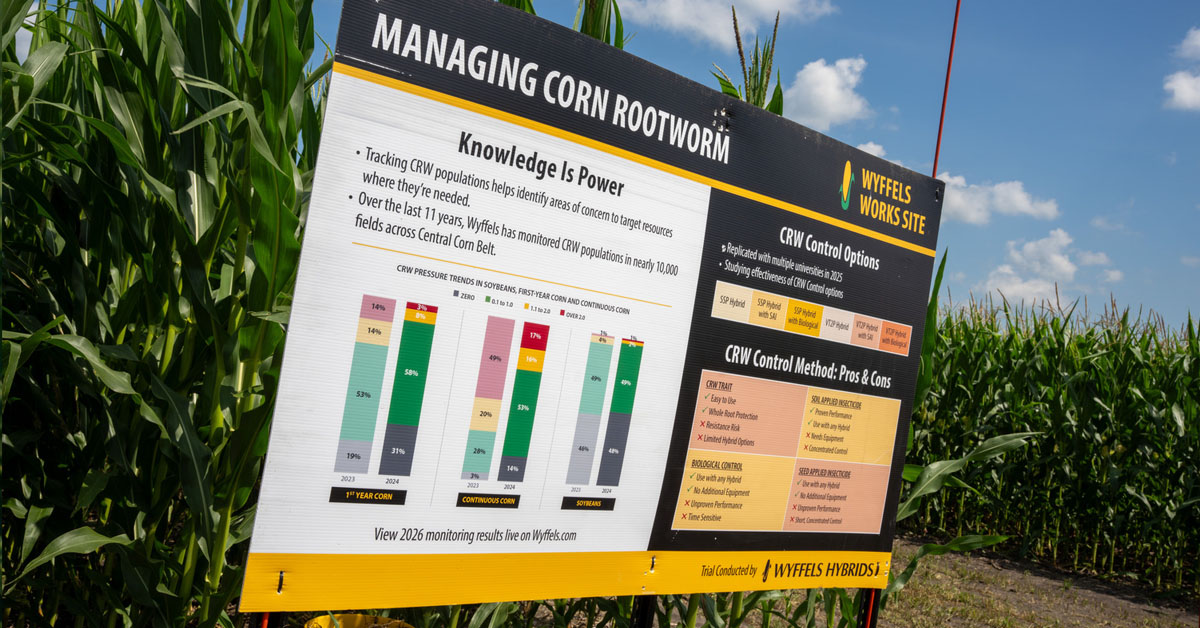
Wyffels monitors hundreds of fields across the Central Corn Belt each year, helping identify trends and provide real-world insights to customers. University research has shown that monitoring beetles today can help predict rootworm risk for the next season. In other words, the data you collect now helps you make more confident, cost-effective decisions later.
Get Started
Interested in participating in the Wyffels Corn Rootworm Monitoring Program?
Or reach out to your local Wyffels representative to get started.