
Is Non-GMO Corn Right for Your Farm? One Grower's 10-Year Experience Says It Might Be.
When evaluating seed decisions, most farmers focus on one thing: profitability.
For Jeremy Rutledge, that focus led him down a path he never expected. More than a decade ago, he wasn't planning to make non-GMO corn a major part of his operation. Today, his family plants 100% Wyffels non-GMO corn.
Why? The answer comes down to performance, profitability, and market opportunities.
A Different Perspective on Non-GMO Corn
Like many growers, Jeremy had heard the common assumption that non-GMO corn couldn't compete with traited products when it came to yield. His on-farm experience told a different story. "In our experience, that's simply not true with Wyffels," Jeremy said. "If the yields weren't there, we wouldn't have stayed with it for more than 10 years." What started as an opportunity to supply corn to a processor quickly turned into a long-term strategy. Jeremy saw firsthand that buyers continued to seek out Wyffels non-GMO corn and that quality concerns were minimal. More importantly, he found that the yield and return on investment consistently met expectations.
Looking Beyond Yield
Yield will always matter. But yield alone doesn't tell the whole story. When he runs the numbers, non-GMO corn often delivers returns that are comparable to, or better than, traited products. Lower seed costs combined with premium opportunities can create a compelling economic advantage without sacrificing performance. "For us, the profit margin per acre is better," Jeremy said. "The products perform, and the market continues to demand quality non-GMO corn."
Addressing Concerns About Insect Pressure
One of the biggest questions growers have about non-GMO corn is insect pressure. Jeremy understands the concern, but his experience has shown that successful non-GMO production comes down to sound agronomic management. Good scouting practices and crop rotation remain important. However, after years of growing non-GMO corn, he has not experienced the yield losses many growers fear. Every operation is different, but Jeremy believes some farmers automatically assume they need the newest trait package to maximize profitability when that may not always be the case.
The Value of Choice
Every farm has unique goals, management styles and marketing opportunities. That's why having options matters. For growers with access to non-GMO markets, the conversation should focus on profitability rather than assumptions. The Wyffels non-GMO lineup is backed by extensive testing, proven genetic performance and a commitment to serving growers who want another option in their seed portfolio. According to Jeremy, that's one area where Wyffels stands apart. "Other companies don't always take the non-GMO market seriously," he said. "Wyffels does."
A Decision Backed by a Decade of Results
Farming is full of decisions that require balancing risk and reward. The Rutledge family's experience with Wyffels non-GMO corn demonstrates that non-GMO production can be more than a niche opportunity. It can be a profitable long-term strategy. After more than 10 years of planting Wyffels non-GMO products, their confidence hasn't changed. "We wouldn't be doing this if the corn didn't yield," Jeremy said.
For farmers looking to evaluate every opportunity to improve return on investment, non-GMO corn may be worth another look. Talk with your local Wyffels Seed Representative to learn more about non-GMO hybrids, available market opportunities and which products fit your operation best.
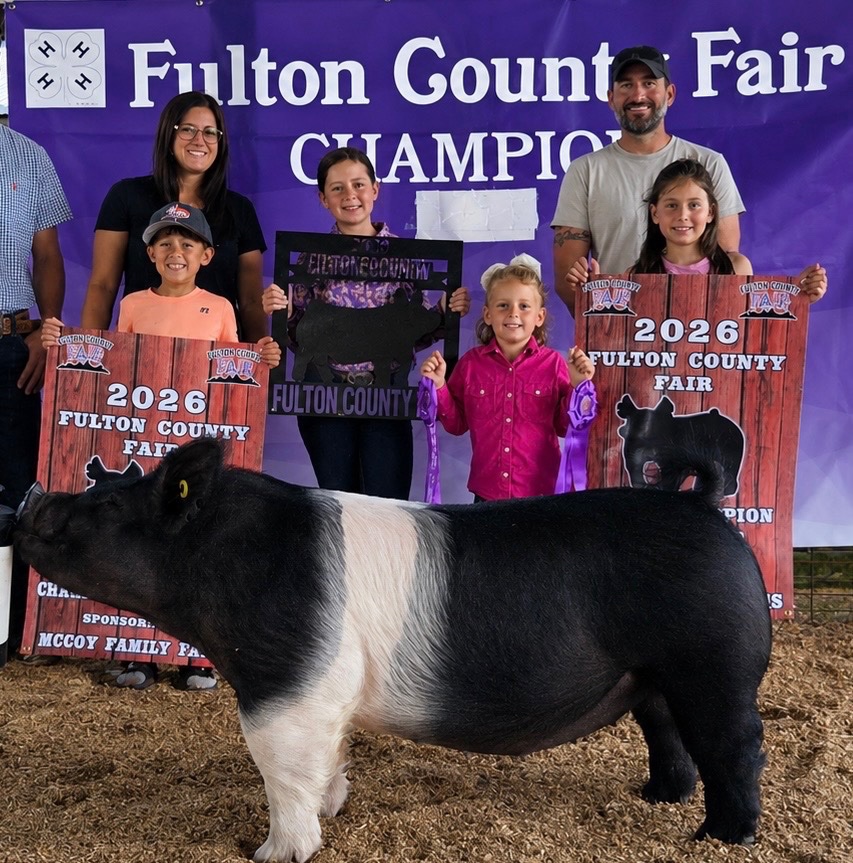
Jeremy Rutledge, with his family at the 2026 Fulton County (IL) Fair.