
Management of poor-quality grain is critical for farmers in years where conditions have not been ideal during the grain fill and drydown phases of corn production. Poor grain quality can be due to uneven weather conditions or increased presence of fungal pathogens causing the plant to not be functioning at peak production. Ear rots, mycotoxins and premature kernel sprouting (vivipary) are major contributors to poor grain quality. Slow grain drydown, excessive late-season rainfall, and delayed harvest will increase the prevalence of each of these issues in fields.
Severely damaged ears from rots have kernels that are smaller sized, less overall weight and are more fragile to harvest than their healthy counterparts. These kernels and ears break more easily during harvest, transport, and handling process which increases the amount of cob particles and dust in the final grain. Preharvest and in season strategies should be implemented to reduce the presence of poor-quality grain.
Ear Rots
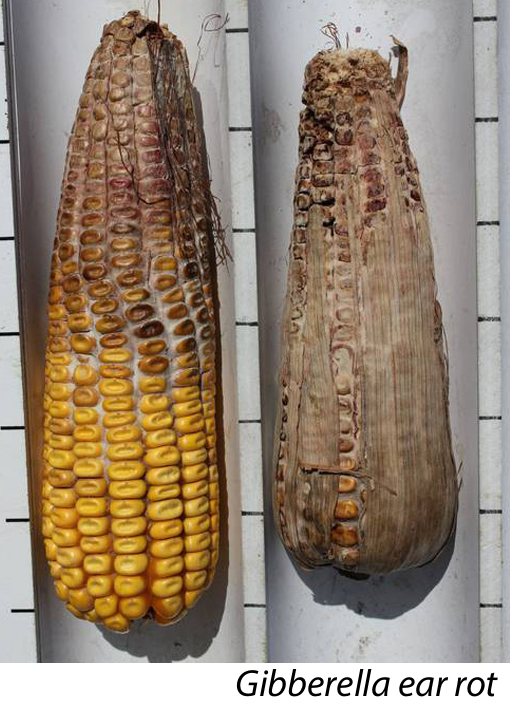
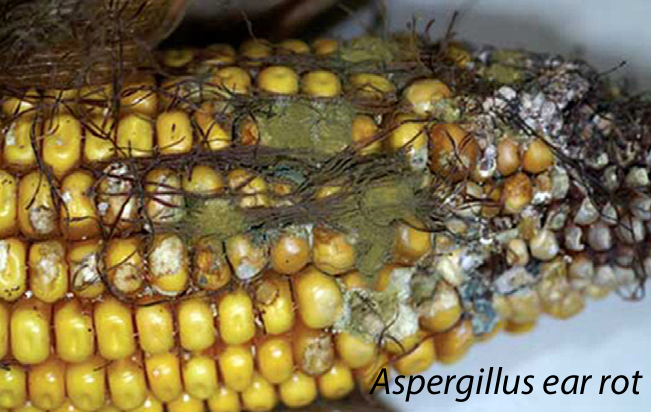
Corn ear rots and kernel molds are present every year, but the degree and type of infestation is highly weather dependent. Proper identification of ear rots can help determine grain handling risks and help develop a plan to limit the impact to other grain.
The four major ear rots that impact corn are Aspergillus, Diplodia, Fusarium and Gibberella ear rots. Wyffels has a Between the Rows article on identification and information on these and other ear rots.
What are Mycotoxins
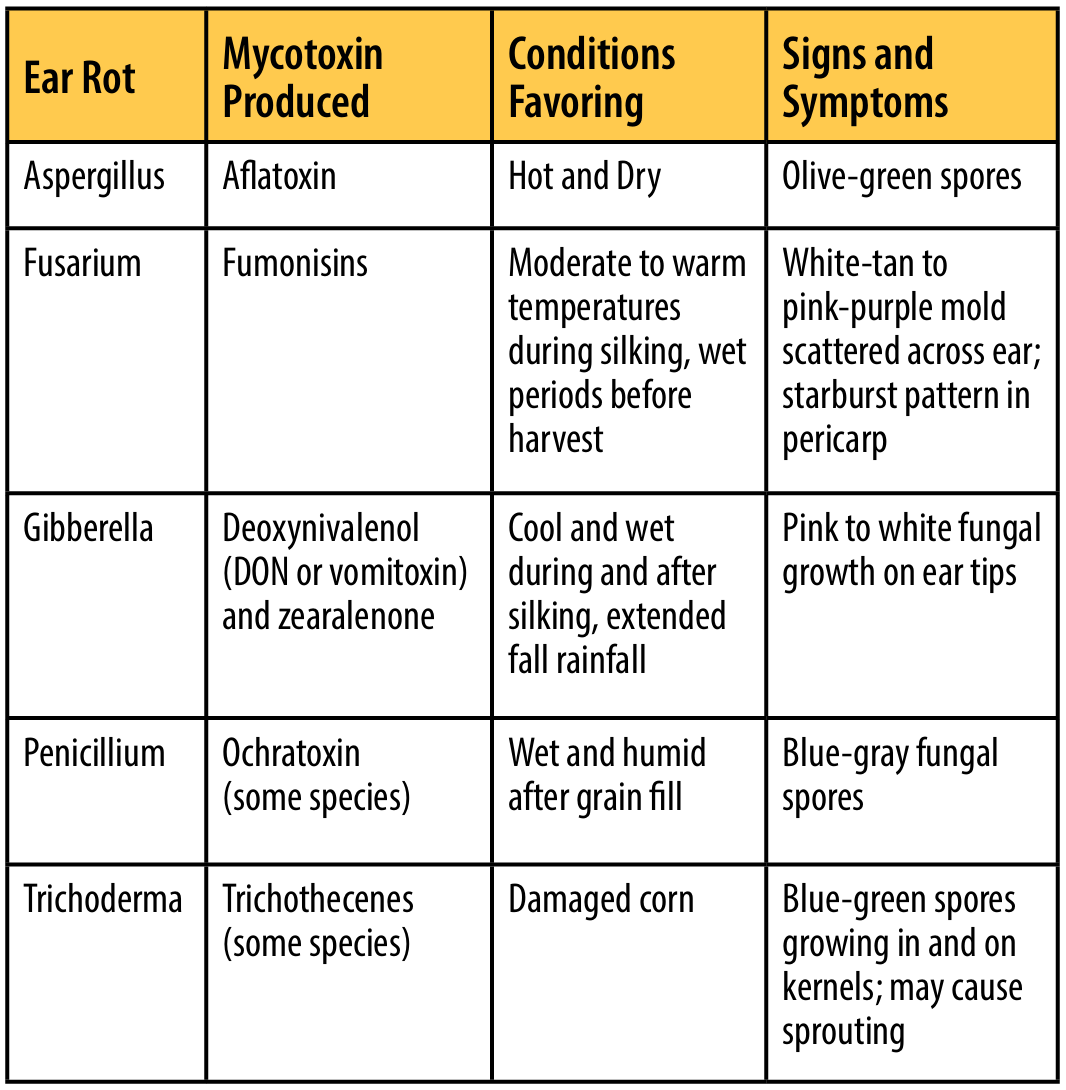
Mycotoxins are natural chemicals produced by some ear mold inducing fungi in corn. These chemicals can be toxic to humans, livestock, and other animals if they consume contaminated food or feed containing them. They can also affect ethanol bi-products and their ability to be used safely. Mycotoxins are stable chemicals where heating, freezing, roasting, or chemical treatments cannot reduce their concentrations present within kernels.
If grain containing mycotoxin concentrations exceeding legal levels is delivered to the grain purchaser (elevator, ethanol plant, etc), the grain may be required by law to be destroyed, or the load can be docked for price or rejected. Specific ear molds produce different mycotoxins.
Mycotoxins and Ear Rot
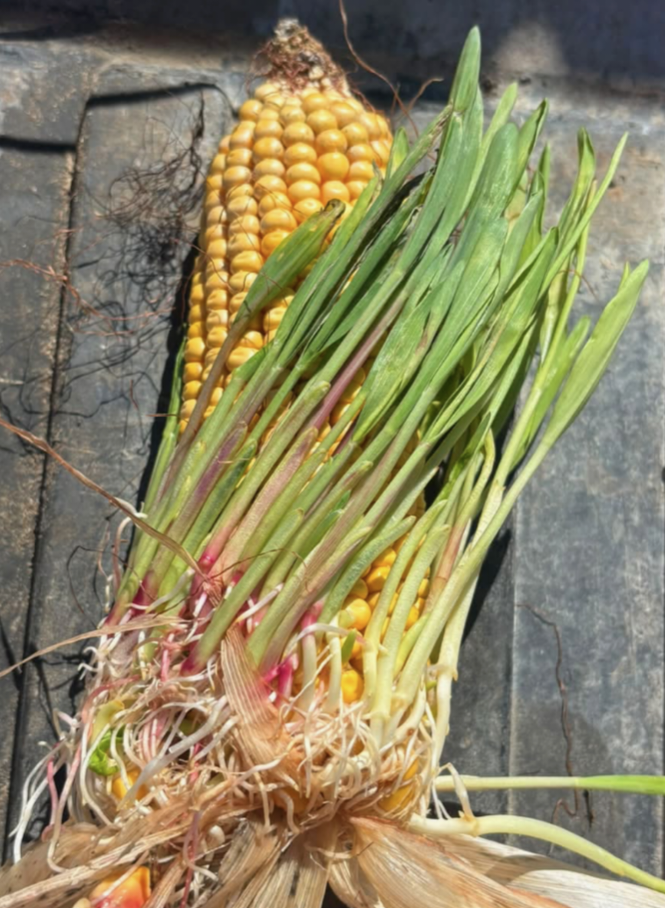
What is Vivipary
Vivipary in corn is a hormonal imbalance, triggered by the environment, that causes the germination of corn kernels on the ear prior to full maturity. Premature sprouting can occur when kernels of less than 20% grain moisture are re-wetted in temperatures above 50ºF. A combination of factors, including erect ears, bird damage, ear molds, wet weather and flooding can contribute to premature sprouting. Rainfall collected by husk leaves on upright ears often leads to kernel sprouting near the butt of the ear. Premature sprouting also occurs when ears are lying on or near the soil surface due to severe stalk breakage or lodging.
Sprouted kernels are usually lighter which can reduce grain yield and test weight if damage is extensive. Sprouted kernels are also more likely to develop molds and mycotoxins. During the harvesting and drying processes, sprouts will disappear and grain will appear normal. Fields showing widespread kernel sprouting should be prioritized for early harvest.
Best Management Practices for Fields with Poor Grain Quality
Scout Fields Prior to Harvest
1) Scout fields at kernel maturity (R6 Growth State; Black Layer) and just before harvest and determine your ear rots present.
2) Scout field areas that are subject to drought-stressed, damaged, or exposed to extreme environmental conditions. (Areas of hillsides with drought stress may contain more Fusarium and Aspergillus while low areas where moisture from fog or high-dew conditions occur may have more Gibberella ear rot.)
3) Select 5 random spots in the field, husk 20 consecutive plant ears at each location, totaling 100 ears per field.
4) Determine ear rot present and at what levels. Fields in which 10% or more of the ears are infected with Gibberella, Aspergillus, Fusarium and Penicillium ear rots could have concerning levels of mycotoxin and should be tested. Grain and Silage Sampling/ Mycotoxin Testing
5) Contact your crop insurance agent prior to harvesting field if there is suspected mycotoxin present as claims are usually performed prior to harvest.
Harvesting Poor Quality Grain
1) Harvest problem fields first. Fungi and vivipary that can continue to grow and spread until the grain is less than 15% moisture.
2) Adjust Combine Settings to reduce kernel damage
- a. Cylinder / Rotor Speed: Reduce speed to lowest possible to shell the grain effectively while maintaining acceptable loss levels of less than 1%. Lower speeds prevent cracking and breaking kernels.
- b. Concave Clearance: Set concave clearance to match average cob diameter to avoid breaking cobs. In general, round bar concaves shell corn with wet and rotten cobs better than large wire concaves. (typically cob thickness setting is between 18-25 mm)
- c. Cleaning Fan Speed: Increase fan speed levels to allow sufficient airflow. Moldy, lightweight, and shrunken kernels float out in the air stream, reducing the overall levels of poor-quality grain
- d. Sieves and Chaffer: Bottom sieve should be wide open, and adjustments the top sieve/chaffer to maintain a clean sample while preventing excess un-threshed material from moving through
- e. Ground Speed: Use reduced speeds and slower gears to ensure an even feeding of material into machine
3) Combining fields at a higher moisture level then utilizing rapid, high heat drying to 15% or below moisture levels can help reduce the spread of ear rots, mycotoxins and vivipary.
Conclusion
Poor grain quality can occur in any season and is very dependent on the environmental conditions. With proper care and management the effects can be mitigated but not eliminated. Harvesting early and getting grain to lower moistures is the best plan of action to stifle pathogen or issues developing.