
Premature sprouting in corn, also known as vivipary, is a condition that causes the germination of corn kernels on the ear prior to full maturity. This sprouting occurs while the kernels are still attached to ears within the husk or if there has been lodging and the ear is in contact with the ground. This can be triggered by a hormonal imbalance due to environmental conditions like drought or kernels molds or be caused by prolonged wet and cloudy / foggy weather.
The Science
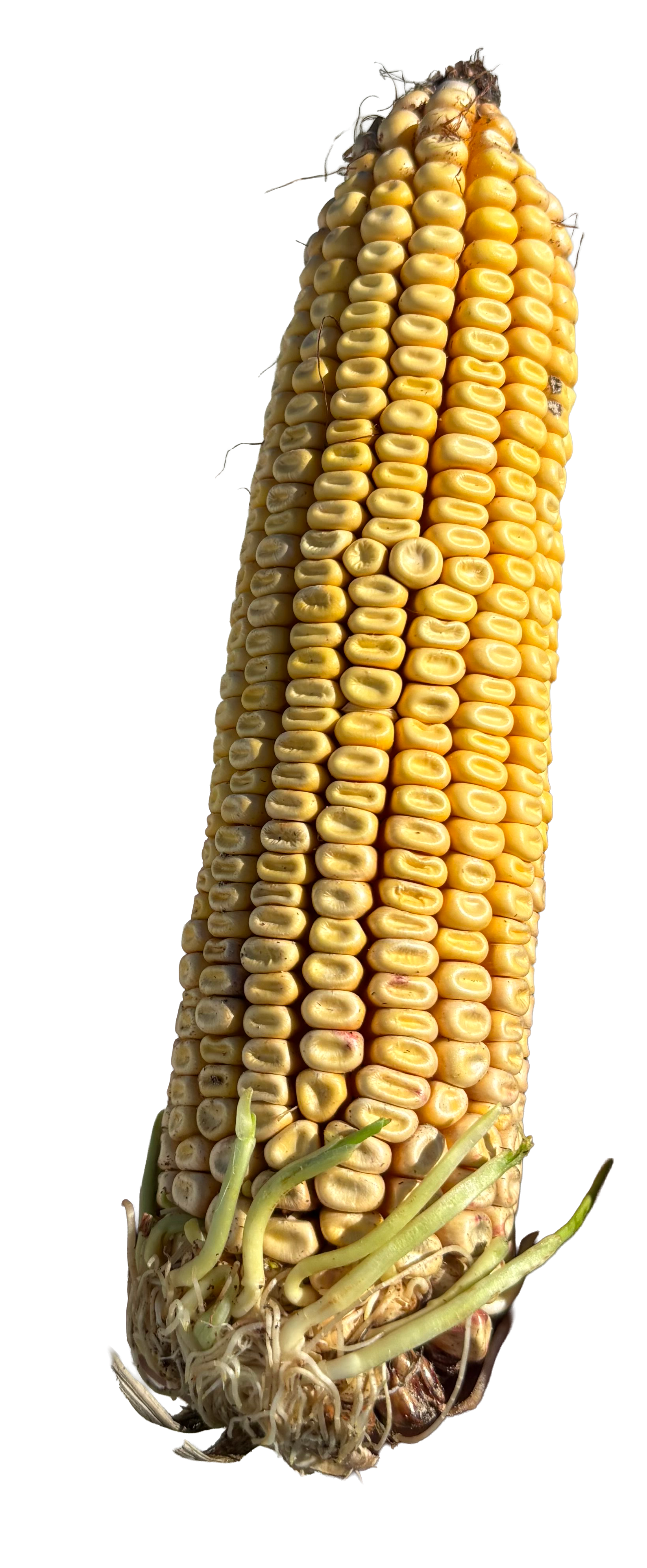
Kernels typically do not germinate prior to physiological maturity (R6 or black layer). However, studies have shown that the hormonal balance between gibberellin and abscisic acids (ABA) effects whether seed development and maturation continue or seed germination occurs. (White, et. Al. 2000). When there is physical damage to the immature kernels via excess moisture, hail, birds, insects or ear molds, the balance among the regulatory hormones can shift causing premature germination. This premature germination can occur when kernels of less than 20% grain moisture are kept wet for extended periods of time in temperatures above 50ºF. Ear molds that produce gibberellic acid can also directly disrupt the balance of hormones and stimulate germination. The combination of factors must align, and not all kernels on the ear will be affected equally. Premature sprouting can also occur when otherwise normal kernels that are black-layered and dry (<20% grain moisture) are rewetted. This occurs when a week or more of rainy and cloudy weather re-wet previously dry ears and provide conditions that favor germination. This is no different than when we plant corn in the spring, where the corn must imbibe at least 30% of its weight in water to initiate germination.
1) Kernels < 20% grain moisture are re-wetted by excessive rainfall in temperatures above 50ºF. a. Premature spouting sprouting is much less common in higher moisture grain compared to drier grain
2) Hybrids with erect ears and/or tight husks can be affected by moisture collecting and sitting in the husks at the base of the ear. October 1, 2026
3) Plants with severe stalk breakage or lodging causing the ear to be near or in contact with the soil surface allowing water to pool in husks
4) Ears with kernel damage from hail, birds, insects or other plant stresses
5) Ears that have aborted kernels due to stress around pollination
6) Fields with extensive ear rots
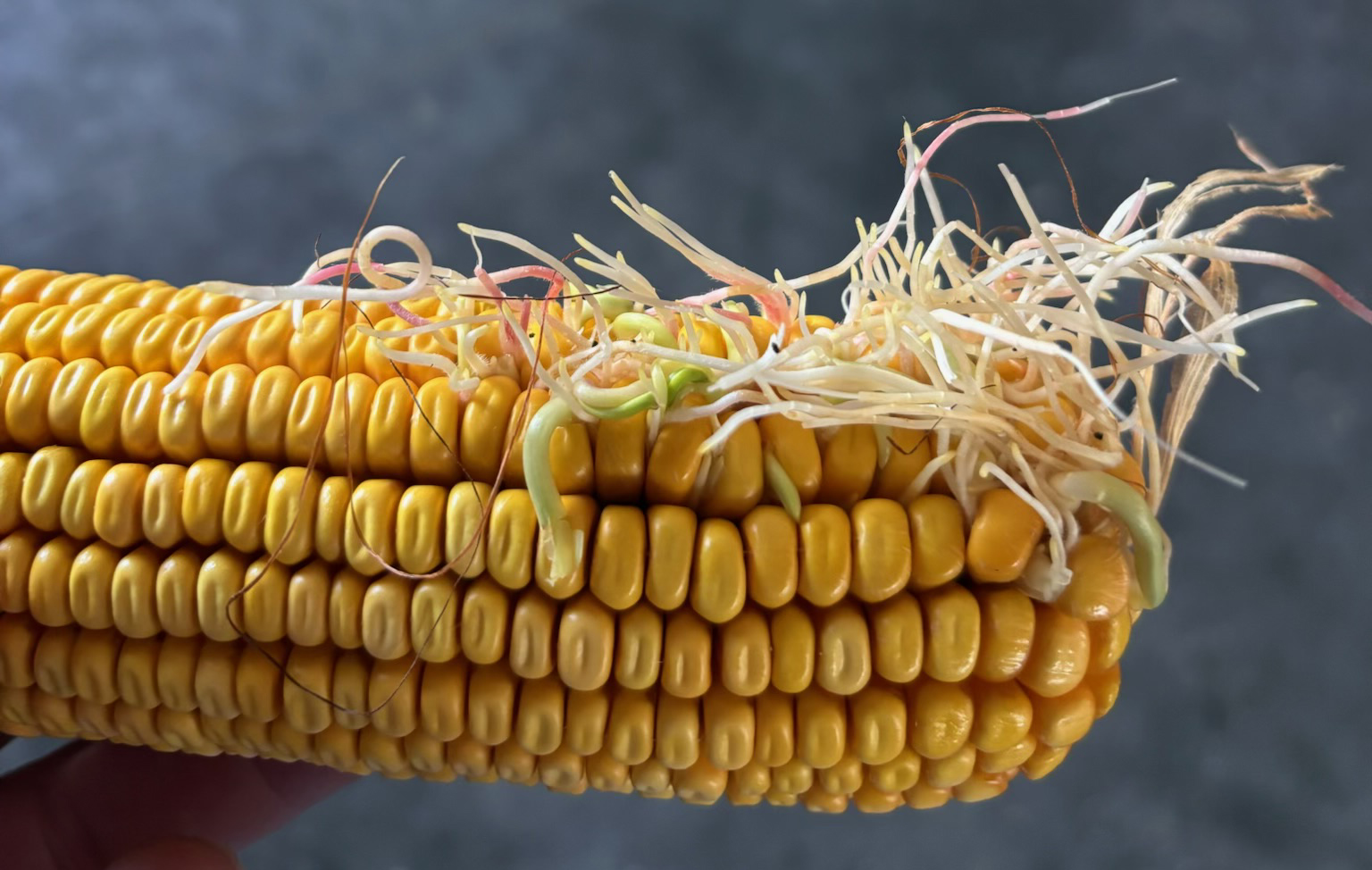
Damage from Premature Sprouting
1) Sprouted kernels are usually lighter which can reduce grain yield and test weight if damage is extensive.
2) Sprouted kernels are also more likely to develop molds and mycotoxins.
3) Increase amount of broken corn and foreign material in grain resulting in grain price discounts
4) Poor grain quality influences drying and reduces storage longevity
Management
1) During the harvesting and drying processes, sprouts will disappear and grain will appear normal. Kernels will be lighter and have poorer test weight.
2) Fields showing widespread kernel sprouting should be prioritized for early harvest as they are more likely to develop additional kernel molds and mycotoxins.
3) Adjust Combine settings for poor quality grain combining if levels are severe. (Wyffels Between the Rows on handing poor quality grain link)
4) Drying grain quickly at higher temperatures to 15% moisture will prevent further growth and reduce ear rot and mycotoxin potential.
5) Screening grain prior to storage can help remove excess fines and sprouts that could cause issues with grain molding, bridging and crusting in storage.
6) It is essential to core bins by hauling out several loads once bins are full to reduce the high concentration of fines that accumulates in the center of a bin during filling. There will be substantially more fines due to poor kernel quality and pieces of the sprouts.
Conclusion
Preharvest sprouting is not typically a widespread problem, but it is something that occurs occasionally when the weather stays wet for extended periods in the fall. While not much can be done to prevent preharvest sprouting, harvesting as early as possible, drying to 15% or less, coring bins, and minimizing storage time will help the problem from getting worse.